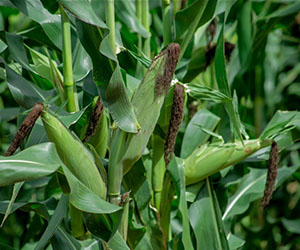
| Varieties: Kalulu (SC301) | Kanyani (SC419) | |||
| WEEK | CROP STAGE | KEY ACTIONS | NOTES / FOCUS |
| –1 | Pre-Planting Preparation | • Conduct soil test; correct pH with lime if needed • Select variety based on available winter window length (see variety table) • Plan irrigation source & schedule (drip, furrow, sprinkler) • Prepare seedbed: plough or rip, and apply basal fertilizer (23:21:0+4S or equivalent) • Source certified Seed Co seed: Kalulu, Kanyani, Mbidzi or Mkango • Optional: pre-plant soil ameliorants (humic/fulvic acids, Zn, B micronutrients) | Good land prep = fast germination. Target fine, moist seedbed. |
| 0 | Planting (Day 1) | • Planting dates: May–June (Malawi winter window) • Seed rate: 10 kg/acre (all Seed Co maize varieties) • Spacing: 75 cm × 25 cm (1 plant/station) or 90 cm × 20 cm • Plant seed 3–5 cm deep into moist soil • Apply basal fertilizer in furrow at planting if not done earlier • Irrigate immediately after planting (25–30 mm) | Keep soil surface moist for 7–10 days to ensure uniform germination. |
| 1–2 | Germination & Emergence | • Target: 90%+ germination by day 7 • Gap-fill any patches where germination failed (within 5 days of emergence) • Apply pre-emergent herbicide before crop emergence • Continue irrigation: 20–25 mm every 5–7 days • Scout for cutworms and stem borers from day 5 | Uniform stand = uniform harvest. Fix gaps early. |
| 2–3 | Seedling Stage (V2–V4) | • Apply post-emergent herbicide (day 14–21) targeting broadleaf & grass weeds • Top-dress with CAN or Urea: 50 kg/acre (first top-dressing) • Irrigation: 20–25 mm every 5–7 days • Scout for Fall Army Worm (FAW): check whorls of 10% of plants • Apply FAW spray (emamectin, spinetoram, or chlorantraniliprole) if >10% infestation | Early weed control critical — weeds compete heavily at V2–V4. |
| 4–5 | Active Vegetative Growth (V5–V8) | • Continue FAW and stalk borer scouting weekly • Second top-dressing with CAN/Urea: 50 kg/acre at V6 stage • Increase irrigation: 25–30 mm every 5–6 days • Apply foliar micronutrients (Zn, B, Mn) if deficiency signs visible • Maintain weed-free field through inter-row cultivation if needed | Maximum vegetative growth drives future cob size. |
| 6–7 | Tasselling (VT) | • Monitor irrigation closely — tassel stage is highly water-sensitive • Irrigation: 30–35 mm per week (increase frequency if hot and dry) • Scout intensively for stalk borers, aphids, and army worms • Apply insecticide if pest threshold exceeded • Avoid any nitrogen top-dressing at this stage | ⚠ Water stress during tasselling severely reduces yield. Keep soil moist. |
| 7–8 | Silking & Pollination (R1) | • Silk emergence: hand-check for silk cut by insects • Irrigation: 30–35 mm/week — DO NOT allow water stress • Scout for aphids on silks and ears • Spray only when necessary; avoid broad-spectrum insecticide during pollination • Check that all plants produce silks (sign of good crop health) | Pollination window: 5–8 days. Water stress now = poorly filled cobs. |
| 8–11 | Grain / Cob Fill (R2–R4) | • Irrigation: maintain 30–36 mm/week; do not reduce • Scout for ear rots (Fusarium, Diplodia) — remove infected ears • Apply foliar feed (high-K formulation) to support cob fill • Scout for late-season aphids and armyworms • Monitor plant health — yellowing of lower leaves is normal; mid-canopy yellowing = N deficiency | Water drives grain fill — every mm of water stress = yield loss. |
| 11–14 | Dough & Denting Stage (R4–R5) | • Reduce irrigation gradually as husks dry down • Monitor for ear and stalk rots • Begin harvest planning: organise shellers, storage, and transport • Scout for stalk lodging — harvest early if >5% lodging | Grain is past the green mealie stage. Prepare for dry harvest. |
| 14–18 | Physiological Maturity & Harvest (R6) | • Black layer formation indicates physiological maturity • Grain moisture at harvest: 20–25% (for immediate use); 12–14% (for storage) • Stop irrigation 2 weeks before harvest • Harvest promptly to avoid post-harvest losses (mould, insect damage) • Dry grain to <12.5% moisture before bagging and storing • Use hermetic bags or grain protectants (e.g., Actellic Super) in storage | Timely harvest = quality grain. Delayed harvest risks ear mould. |
| Seed Co Malawi Maize Variety Guide: Kalulu SC301 (80 days) | Kanyani SC419/SC449 (90 days) | Mbidzi SC555 (115 days) | Mkango SC665/SC657 (128 days). This calendar provides general guidance for irrigated winter maize in Malawi. Adjust timing to your specific variety maturity. Contact a Seed Co agronomist for local advice. Toll Free: 2027. | |||

 Malawi
 Seed Co Group
 Angola
 Botswana
 DRC
DRC Kenya
Kenya Nigeria
 South Africa
 Tanzania
 Uganda
 West & Central Africa
 Zambia
 Zimbabwe