The first light of day stretched slowly across the open plains of Kimana, painting the land in soft shades of gold and amber. In the distance, the quiet presence of Mount Kilimanjaro stood watch, as it always had, unchanging, even as the seasons below grew increasingly unpredictable.
Here, farming is more than an occupation. It is persistence. It is adaptation. It is the daily act of working with nature, even when nature does not always cooperate.
For weeks, the land had felt the strain of a dry spell. The soil had hardened, and many fields bore the visible signs, wilting leaves, uneven growth, and the familiar uncertainty that follows when rains delay. It was under these conditions that the Astra F1 demonstration plot was introduced, almost as if it were meant to be tested, not in ideal circumstances, but in reality.
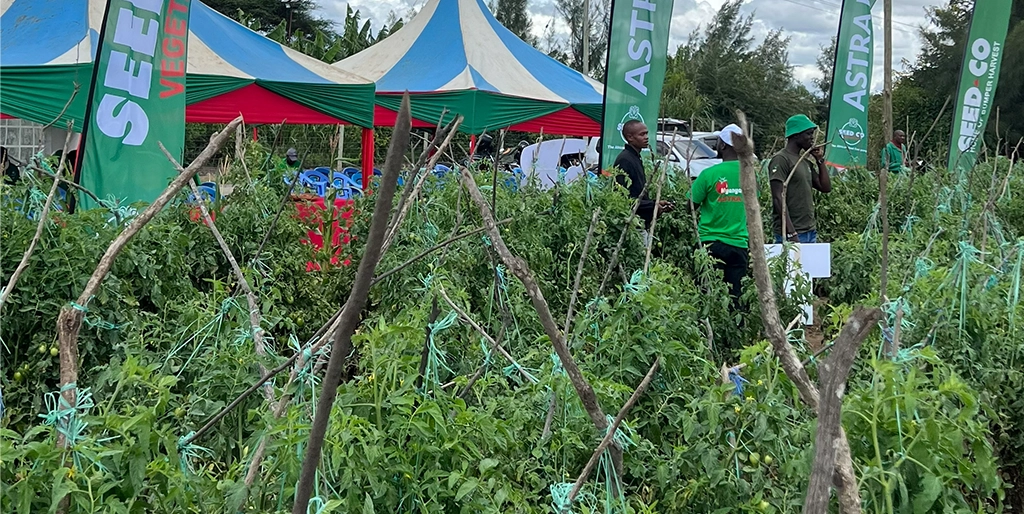
By mid-morning, a steady stream of visitors had begun making their way toward the site. Some arrived out of curiosity, others out of necessity. There was no grand announcement, no spectacle, just a shared interest in seeing whether this new hybrid could truly offer something different.
And then, the field came into view.
At first glance, it didn’t just look like another plot, it looked like an exception. In contrast to the surrounding fields, the Astra F1 crop stood remarkably uniform and vibrant. The plants were upright and well-structured, their leaves a healthy green that immediately drew attention. Even before stepping closer, it was clear that this crop had responded differently to the same environment.
As people gathered along the rows, the quiet observation began.
Fruits were carefully picked and passed from hand to hand. There was a natural instinct to test them, to press gently, to feel their weight, to assess their quality without needing explanation. The response was almost immediate. The fruits were firm, consistently firm, with a solid structure that suggested strength from harvest to market.
In Kimana, this matters more than it might elsewhere.
Transporting produce often involves long distances over rough roads. Softer fruits bruise easily, spoil quickly, and reduce the value of an otherwise good harvest. But these fruits felt different.
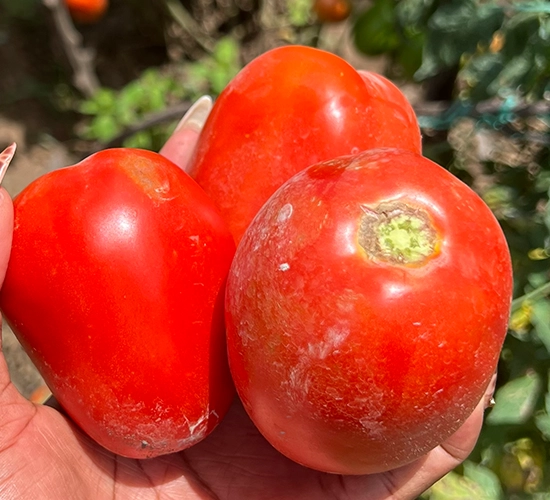
Their firmness meant they could withstand handling, travel further, and arrive at the market in better condition. It was a small detail, but one with significant implications.
The deeper people walked into the plot, the more the details revealed themselves.
Despite the recent dry conditions, the plants showed a clear ability to tolerate drought. There was no widespread curling of leaves, no stunted growth patterns that typically follow water stress. Instead, the crop maintained its vigor, suggesting a capacity to endure periods of limited moisture without compromising overall performance.
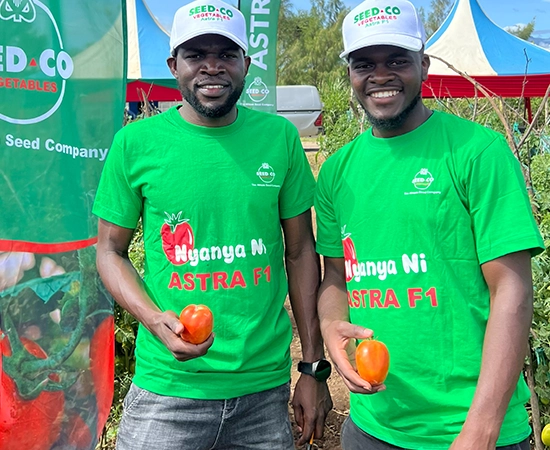
This was not theoretical resilience, it was visible, practical, and immediate.
Nearby conversations began to shift in tone. What started as casual remarks turned into more focused discussions. Comparisons were made, not just between Astra F1 and other varieties, but between expectation and reality.
Attention then moved to another critical aspect: plant health.
In many fields across the region, disease pressure is a constant concern. A single outbreak can spread quickly, turning weeks of effort into loss. Yet within the Astra F1 plot, the crop appeared notably clean. Leaves were intact, with minimal signs of damage. Fruits were unblemished. The overall impression was one of strong resilience to diseases, reducing the visible need for repeated chemical intervention.
This observation carried weight.
Healthier crops mean fewer inputs, lower costs, and less uncertainty. It also means that farmers can spend less time reacting to problems and more time focusing on productivity.
As the sun climbed higher, the demonstration site evolved into something more than just a viewing point. It became a place of reflection where experience met possibility. People moved slowly through the rows, taking in not just what was growing, but what it represented.
There was something powerful about seeing performance under real conditions. No controlled environment. No ideal irrigation setup. Just the same soil, the same weather, the same challenges, and a different outcome.
That difference is what stayed with people.
By early afternoon, the energy around the field had changed. The quiet skepticism that often accompanies new introductions had softened into genuine interest. Questions became more practical, about planting, about management, about availability. The conversation was no longer about whether Astra F1 could perform, but how soon it could be tried.
What made the launch truly stand out was not just the crop itself, but the way it connected with the realities of Kimana. It addressed the exact pressures farmers face: unpredictable rainfall, persistent diseases, and post-harvest losses. And it did so in a way that required no persuasion, only observation.
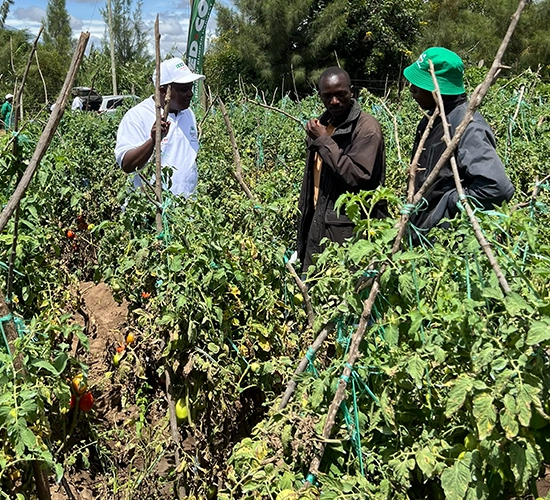
As the day began to wind down, long shadows stretched across the field, and the golden light returned, softer now, more reflective. People began to leave in small groups, walking back along familiar paths, but carrying with them something new.
The conversations didn’t end at the field.
They continued along the roads, in homes, in trading centers, replaying what had been seen, discussed, and felt. The story of Astra F1 was no longer confined to a single plot of land. It had begun to travel, shaped by firsthand experience and shared through trust.
In a place where each season brings its own set of challenges, the introduction of Astra F1 offered something rare: a sense of reassurance. Not a guarantee, because farming never offers that, but a stronger position from which to face the unknown.
Through its firm fruit quality, its ability to tolerate drought, and its resilience to diseases, Astra F1 proved that innovation, when grounded in real conditions, can do more than improve yields, it can restore confidence.
And in Kimana, confidence is everything.
Because sometimes, the success of a single field is enough to shift an entire season’s outlook.

 Kenya
Kenya Seed Co Group
 Angola
 Botswana
 DRC
DRC Malawi
 Mozambique
 Nigeria
 South Africa
 Tanzania
 Uganda
 West & Central Africa
 Zambia
 Zimbabwe