On the 11th of March 2026, I turned a page and stepped into a living chapter where the land of agriculture, and research meet in Zimbabwe. As Saint Augustine once reflected, “The world is a book, and those who do not travel read only one page,” and on this day, I chose to read deeply.
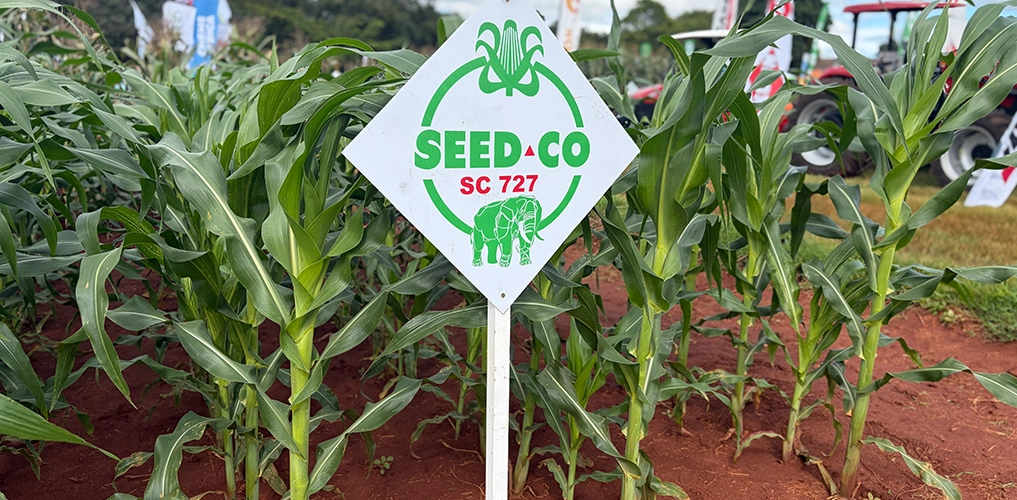
At the Rattray Arnold Research Station Field Day, this is where the land of agriculture, and research exists. This is no ordinary field. It is a classroom without walls, where every row of maize carries a lesson, every leaf reveals intention, and every detail reflects the quiet discipline of science at work. What lay before us was more than agriculture; it was research in motion, precision in practice, and knowledge taking root. We did not arrive as spectators, we arrived as students of the soil, ready to learn, to question, and to grow.
I, Tapela Lungu, the Group Digital Officer for Seed Co Group stood alongside a remarkable Zambian delegation, Grace Marie Kalungu, Head of Marketing for Seed Co Zambia; Rodrick Hamvumba, Head of Agronomy for Seed Co Zambia; and Jasper Simanego, Head of Sales for Seed Co Zambia. Together, under the Seed Co Group exchange programme, we journeyed not only across borders, but across perspectives.
What unfolded before us was a living classroom. Fields stretched in disciplined harmony, each plot telling a story of deliberate care, from seed-to-water stewardship, fertiliser precision, from experimental trials to refined portfolio varieties. Every cob stood as evidence.
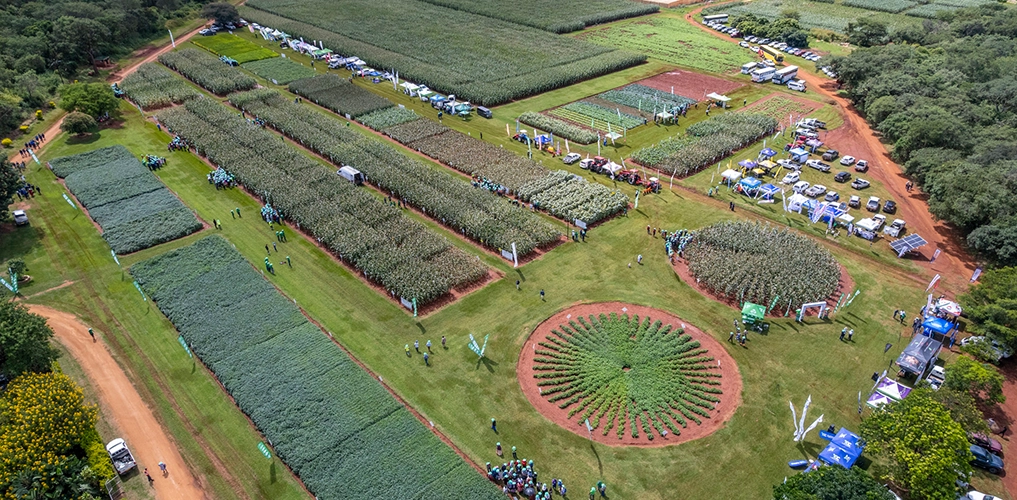
Every tassel, every silk, every variation in colour was a testament to the unseen hours of research, iteration, and scientific curiosity. The leaves whispered health; the sheaths reflected resilience. It was not just agriculture; it was artistry shaped by data and discipline.
Across the 300, 400, 500, 600, and 700 series, one could not help but pause in awe. This was research elevated, propagated to global standards, yet deeply rooted in African soil. And then, a moment of delight. At the vegetable stand, we encountered the Canova F1 tomato, deep red, vibrant, almost calling out to be tasted. Its indeterminate growth habit spoke of continuity, its firmness of resilience, its resistance profile of science at work.
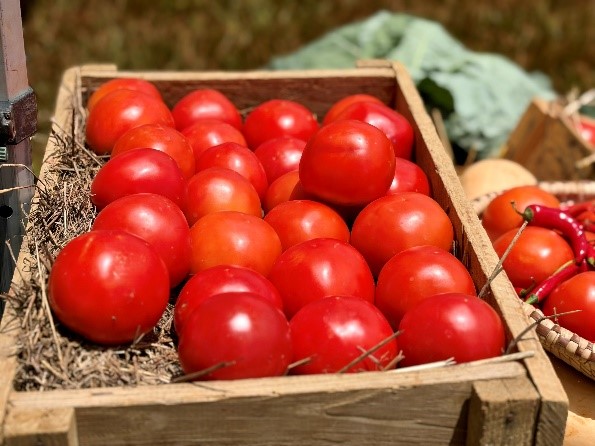
It stood there, quietly embodying the future of horticulture, equally suited for the farmer’s field and the consumer’s table. I must admit, I came very close to taking a bite, not out of hunger, but out of admiration. But perhaps the most powerful sight was not the crops, it was the people.
Students eager with curiosity. Farmers grounded in experience. Scientists immersed in discovery. And even the often-overlooked “inactive middle,” drawn into a space where learning was alive and shared. It was a convergence of minds, backgrounds, and purposes, all orbiting around one truth, that knowledge grows best when it is shared.
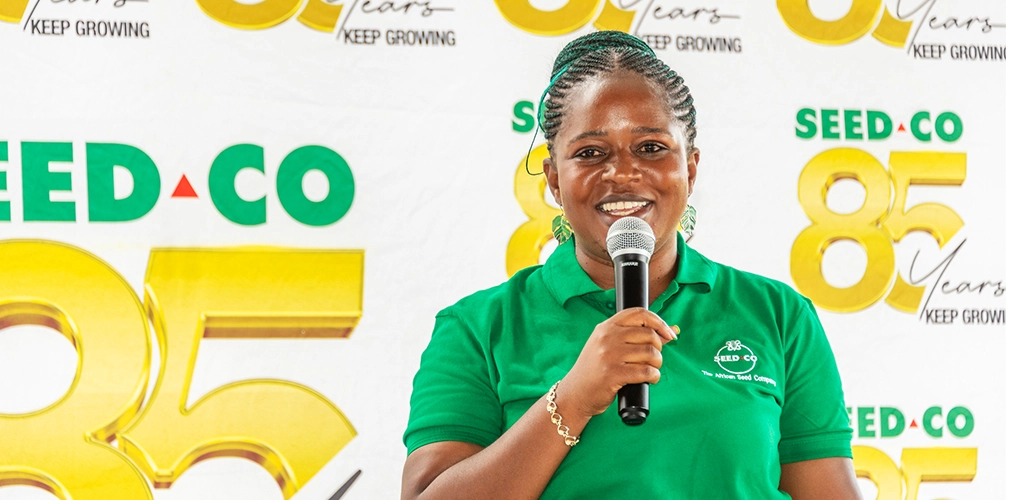
Wendy Madzura, the Seed Co Group Head of Agronomy and Seed Co Zimbabwe Limited Head of Public Relations moved through the day with a kind of effortless command that held every visitor in place, not out of obligation, but out of genuine captivation. There was a rhythm to her voice, a steady rise and fall that carried both authority and warmth. At one point, I found myself half-thinking she might need a pause, perhaps even a bottle of water to slow the pace of her delivery, but she never did. Instead, she carried on, fuelled not by fatigue, but by passion. Well, done Wendy!
As the master of ceremonies, she did more than simply lead the programme, she animated it. Each transition felt intentional, each introduction purposeful, and each explanation layered with insight. In her presence, the field day was not just structured, it was alive, flowing seamlessly from one moment of learning to the next, drawing everyone deeper into the experience.
There was warmth, intention, and a deep sense of respect in the entire programming. We were hosted not just as colleagues, but as valued partners in a shared mission, alongside our counterparts from Seed Co Mozambique and Seed Co Malawi. It was a reminder that collaboration is not an abstract idea; it is lived, felt, and experienced.
And at the heart of it all stood progress. We were honoured to witness the official launch of two flagship varieties, SC 449 (maize) and SC W9104 (wheat), led by Professor Obert Jiri, Permanent Secretary in the Ministry of Lands, Agriculture, Fisheries, Water and Rural Development. These were not just products; they were milestones, symbols of Africa’s growing capacity to feed itself, innovate, and lead.
In that moment, the words of Albert Einstein echoed with renewed clarity: “If we knew what we were doing, it would not be called research, would it?”
Research, then, is not certainty, it is courage. As we journeyed back to Lusaka, Zambia, our conversations were rich, reflective, and alive with possibility. For some, this was a familiar path. For me, it was a first, an awakening to the depth, detail, and dedication that underpins Seed Co’s research and development engine.
And in that reflection, one truth became clear, Seed Co is not merely a commercial enterprise. It is a living institution of science, intent, and innovation. A global research pole rooted in African purpose.
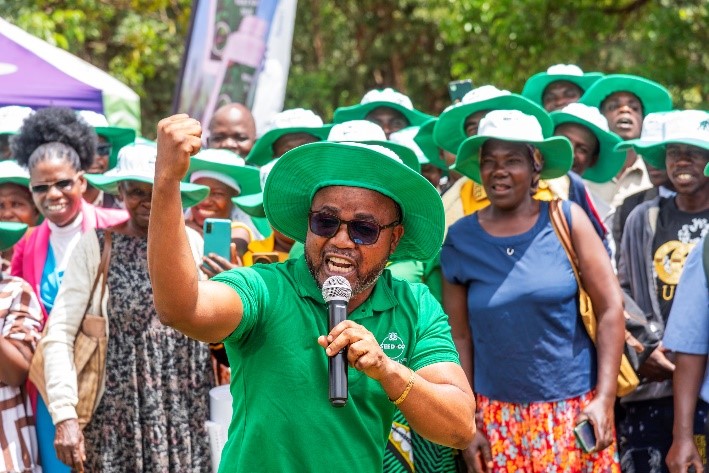
And then came a moment of pure joy, one of those light, unforgettable highlights that stays with you long after the field day ends. From Team Malawi, I picked up a slogan that carried both humour and deep meaning: “Seed Co, nsima, ndiwo, ndalama mutumba chwe!”
It rolled off the tongue with laughter, but behind it was a powerful truth. In simple terms, it meant Seed Co is not just seed, it is nsima (the staple), ndiwo (the relish), and ultimately, ndalama (the money in the pocket). It was a celebration of value, of livelihood, of impact.
The way they said it, full of energy, pride, and rhythm, turned it into more than just a slogan; it became a chant of identity. A reminder that for many farmers, Seed Co is woven into the very fabric of daily life, from what is grown, to what is eaten, to what sustains households. And honestly… yaaay indeed.
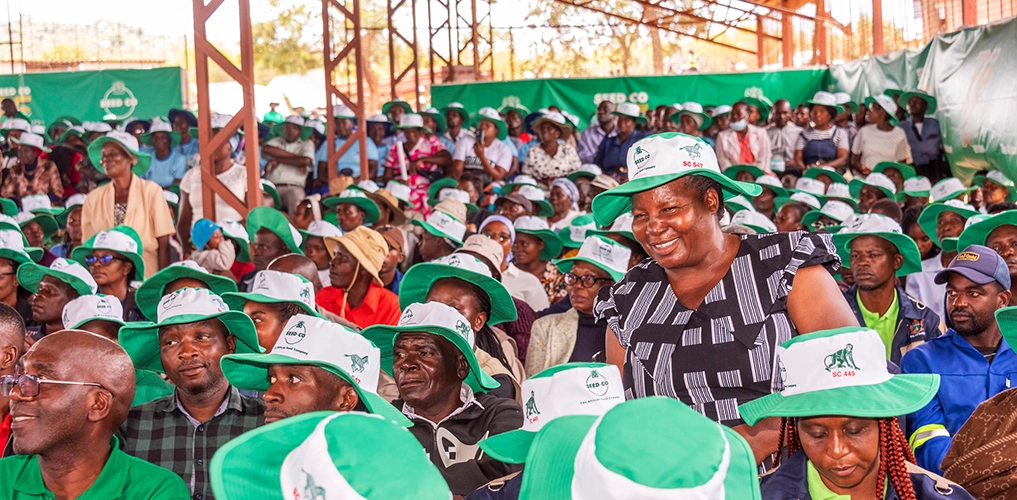
To witness this is to feel proud, to be part of it is to feel responsible, to carry it forward is to continue learning, sharing, and building, together. All these written echoes pull our clear mission, “breed seed, feed and lead in Africa.” “Maita basa.”

 Zambia
 Seed Co Group
 Angola
 Botswana
 DRC
DRC Kenya
Kenya Malawi
 Nigeria
 South Africa
 Tanzania
 Uganda
 West & Central Africa
 Zimbabwe