LUSAKA, Zambia – A call to rethink workplace safety beyond the visible echoed through Seed Co’s International Safety Week commemorations, as the Guest of Honour, Director of Occupational Safety and Health Services, Mr George M. Mukosiku, urged organisations to embrace a more holistic understanding of health.
“Health is not merely the absence of disease,” he said, drawing from global definitions. “A person can be physically present… yet mentally absent. And that is where the real risk lies.”
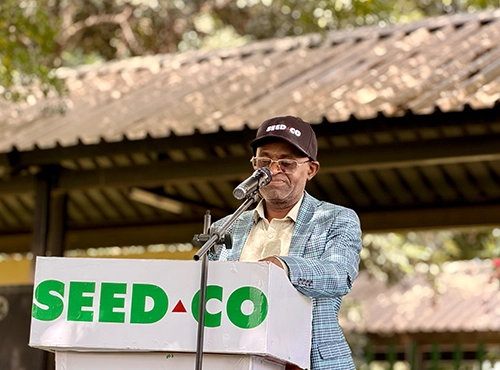
The Director of Occupational Safety and Health Services stated that it was high time for organisations to shift the conversation from compliance to consciousness, reminding attendees that incidents are often rooted not in broken systems, but in unseen human struggles.
“Stress, fatigue, and silent pressures, he noted, are increasingly becoming the hidden triggers of workplace accidents.
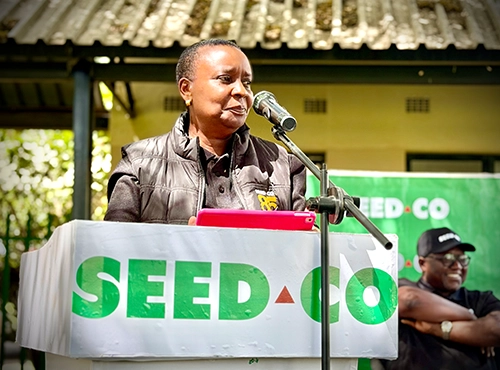
Meanwhile, Seed Co Zambia Managing Director, Grace Bwanali, anchored the discussion in the organisation’s journey toward a “Zero Harm” culture. She reaffirmed that safety at Seed Co is not an obligation, but a value embedded in every decision.
“If it is not safe, do not do it. Make it safe, then do it,” she emphasised, reiterating the company’s guiding principle.
Mrs Bwanali highlighted the company’s progress in strengthening leadership accountability, embedding safety into operations, and fostering behavioural change.
She acknowledged that the future of safety lies in something deeper, building workplaces where employees feel heard, supported, and psychologically secure.
“We must create environments free from stress, burnout, and fear. Because people perform best when they feel valued,” she said, aligning her message with this year’s global theme on psychosocial well-being.
And speaking at the same event, the President of the Zambia Occupational Health and Safety Association (ZOHSA), Mr Eustace Shanzi challenged conventional perceptions of safety.
“The most dangerous risks are not always visible,” he said. “You can see a broken machine… but you cannot see a stressed mind.”
He reminded the audience that silence, pressure, and unspoken struggles often precede the most tragic incidents. He called on leaders to listen more, to act sooner, and to prioritise people over performance.
Across the discussions, voices from various sectors painted a broader, more grounded picture of safety as a shared responsibility, one that stretches far beyond policy into everyday human behaviour.
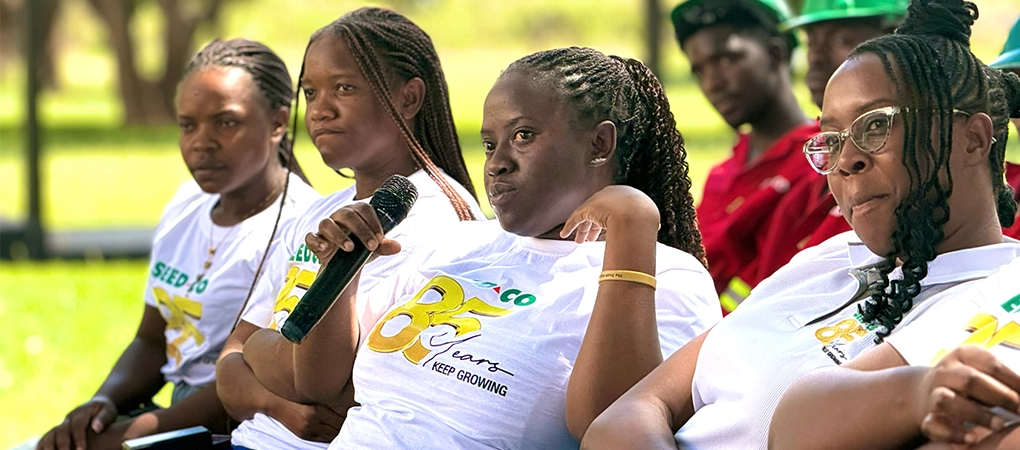
Contributions from the Road Transport and Safety Agency’s Education Officer, Mr John Siingwa, underscored that human error remains the leading cause of road accidents, reinforcing the urgent need for behavioural change at an individual level.
In the same vein, reflections from the Director of CSR Network Zambia, Mr Lee Muzala, placed people at the centre of sustainability, emphasising that businesses thrive when they care not only for operations, but for employees, their families, and the environments they operate in.
There were quiet but powerful acknowledgements throughout the engagements, recognising the need to reach drivers beyond boardrooms, to extend education into communities and institutions, and to accept that behaviour change is not immediate, but continuous.
Even insights from the Chilanga Town Council Fire Brigade, represented by Fire Officer Mr Chester Muchindu, echoed the importance of prevention, awareness, and early response in safeguarding lives.
As the commemoration came to a close, it became clear that this was not merely a ceremonial gathering, but a moment of collective introspection.
This year’s International Safety Week, held under the theme “Let’s ensure a healthy psychosocial working environment,” calls for a decisive shift in how organisations define protection.
It is no longer enough to safeguard bodies alone; minds must be protected, voices must be heard, and workplaces must become environments where both performance and well-being can coexist.

 Zambia
 Seed Co Group
 Angola
 Botswana
 DRC
DRC Kenya
Kenya Malawi
 Mozambique
 Nigeria
 South Africa
 Tanzania
 Uganda
 West & Central Africa
 Zimbabwe