What began as heavy rains quickly escalated into devastating floods between the 2025 to 2026 rain season across several districts, leaving families displaced, crops destroyed and critical infrastructure damaged.
From Lunga District in Nsamba Chiefdom, where households were left homeless, to flash floods affecting over 1,100 households in Choma, Livingstone and Monze, the 2025/2026 rainy season has tested Zambia’s disaster preparedness systems.
In Livingstone, the Disaster Management and Mitigation Unit (DMMU) announced urgent assessments of flood-damaged crossing points, while in Lundazi and Lumezi, washed-away bridges and rising waters forced the deployment of the Zambia Air Force and Zambia National Service for rescue and relief operations.
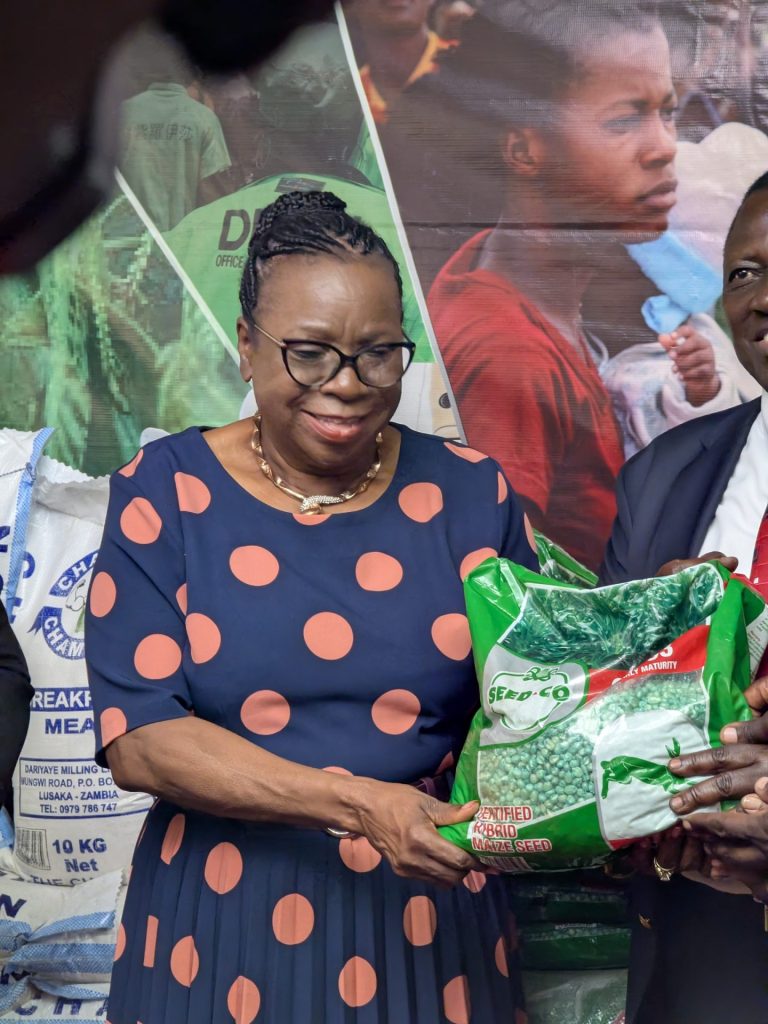
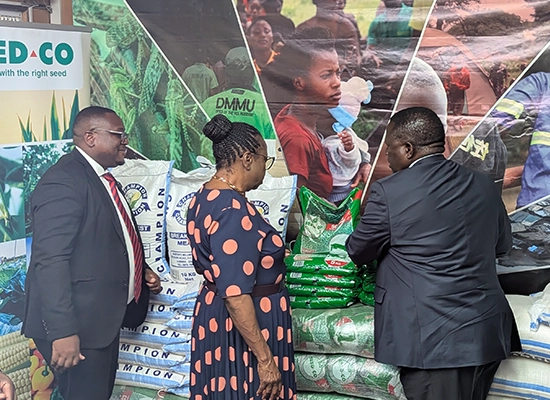
In partnership with Zambia State Insurance Corporation Life Insurance (ZSIC Life), Seed Co Zambia donated relief items through the Office of the Vice President at the Disaster Management and Mitigation Unit (DMMU) Headquarters in Lusaka.
The donation included 1,000 by 25kg bags of mealie meal from ZSIC Life, alongside 10 metric tonnes of ultra-early maturing maize seed and 1,000 by 10kg bags of mealie meal from Seed Co Zambia.
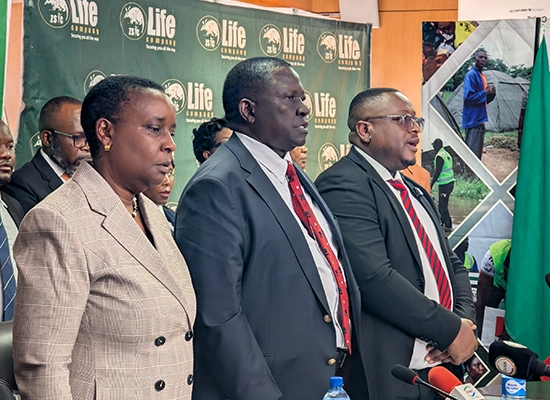
Speaking at the handover ceremony, Vice-President of the Republic of Zambia, Mrs Mutale Nalumango said that the country’s worsening floods, storms and weather extremes were a clear warning that disaster mitigation must be proactive and collective.
“It is imperative that we work together to mitigate their impact,” she said. “The country has recently experienced severe weather conditions, including floods and drought, which have affected several districts and communities.”
She cautioned against complacency despite projections of a strong agricultural season. “Climate change has made it impossible to predict intensity. Drought today, floods tomorrow. You can’t say this year it will end. This is our new reality,” she said.
The Vice President revealed that since the start of the rainy season, Zambia had faced floods, hailstorms, strong winds, pest outbreaks and public health threats affecting agriculture, education, sanitation and infrastructure.
“In Kasama, hailstorms wiped out entire crop fields. In Southern Province, floods washed away maize and other food crops. These hazards are not selective, they are everywhere,” she said.
She commended the two companies for their consistent corporate social responsibility.
“Companies have a social responsibility to the communities in which they operate, particularly when it comes to saving lives and supporting citizens during times of disaster,” she emphasised, adding in a lighter moment: “Today, I am your marketing manager, because any company that ploughs back into communities deserves public confidence.”
Meanwhile, Seed Co Zambia Board Chairperson Chance Kabaghe underscored the critical role of research and development in producing drought-tolerant and climate-smart seed varieties. He pointed to ultra-early maturing varieties such as SC303 as a practical response to climate uncertainty.
“Without such options, family’s risk having nothing for the entire season. With them, at least there is something to harvest within three months,” Kabaghe said.
He further explained that Seed Co was distributing maize seed in accessible pack sizes, including 5kg packs, to support household-level food production and ensure that even small-scale farmers can plant and harvest within a short season.
“Being called upon to support affected communities is both a privilege and an honour. We remain committed to standing with farmers whenever circumstances demand it,” he said.
And ZSIC Life Chief Executive Officer Collins Hamusonde said the scale of disasters prompted the insurer’s decision to channel support through the Office of the Vice President.
“We are encouraged to do more, and we implore other institutions to come on board,” Hamusonde said. “When livelihoods are disrupted, what matters most is standing together and extending a helping hand.”
He stressed that the donation was not a one-off gesture.
“Our contribution today is meant to reassure you that you are not alone in tackling disasters,” he said. “ZISC Life remains committed to continued partnership with government, including exploring support to programmes such as the School Feeding Programme.”
Zambia’s recent crises reflect a broader pattern. Over the past decade, the country has oscillated between prolonged droughts and destructive floods.
The 2015-2016 El Niño-induced drought severely reduced maize production, while successive dry spells in 2018 and the severe 2023-2024 drought strained national food reserves, according to the Zambia Meteorological Department and reports by the Food and Agriculture Organization (FAO).
Conversely, the 2019-2020 and 2022-2023 rainy seasons recorded episodes of flash floods in parts of Lusaka, Southern and Eastern provinces, displacing thousands and damaging infrastructure, as documented by DMMU situation reports and the International Federation of Red Cross and Red Crescent Societies (IFRC).
Experts have consistently linked these erratic patterns to climate change, noting increased variability in rainfall intensity and distribution across Southern Africa.
As Zambia now anticipates a potential bumper harvest, authorities have reiterated that resilience building, from dam construction and irrigation expansion to improved early warning systems, must move in tandem with relief efforts.
As floodwaters begin to recede in some districts and recovery efforts take shape, the message from Lusaka is clear, disaster response is no longer episodic charity, but a shared national responsibility.
It is a commitment that Seed Co, the Home of Bumper Harvest, continues to uphold through timely intervention, innovation, and support to affected communities.

 Zambia
 Seed Co Group
 Angola
 Botswana
 DRC
DRC Kenya
Kenya Malawi
 Mozambique
 Nigeria
 South Africa
 Tanzania
 Uganda
 West & Central Africa
 Zimbabwe